

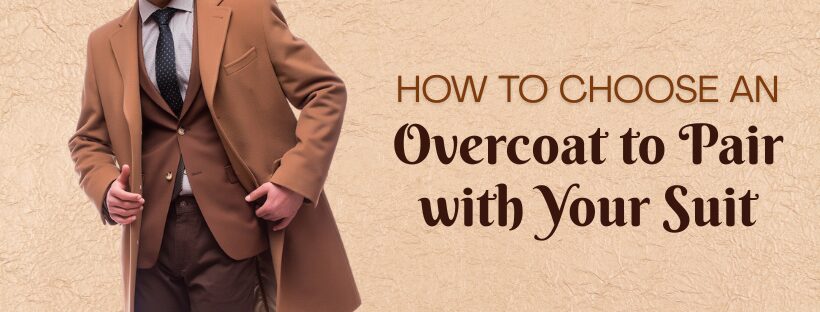
How to Choose an Overcoat to Pair with Your Suit?
Overcoats are an important element in any men’s suit set or an ensemble. When men prefer readily paired suit sets, there is no choice other than using the matching overcoats. However, when men intend to pair it as a separate or for layering, then come these questions—which overcoat pairs well with the trousers, what color suits the best, how to tailor it for a perfect silhouette, what are the ideal overcoat specifications, etc.
This blog answers all of these questions in your mind and helps you effortlessly choose the right overcoat for your suit in no time.
The thickness of the overcoat fabrics
As the layers go from inside out, the thickness must gradually increase. This means the innermost layers of your suit remain thin, and the outermost layer (which is the overcoat) remains thicker. This ensures no bulge look, even when three or more layers are added to your suit.
Accordingly, choose between lightweight and heavy fabrics. The seasons also play a role in deciding the fabric and thickness of overcoats. For example, winter needs thicker fabrics like heavy wool, and mid- or late fall needs lightweight fabrics like cotton or linen.
Accessorising the overcoats
If at all your overcoat has an option to add a belt, then choose leather ones as they give a signature look to your overcoat, as well as the overall suit. As men prefer boots and leather shoes for winter, wearing these belts makes it a perfect pair for the overcoat.
Types of overcoats for men
- Regular suit overcoats
These are ordinary overcoats with long lengths and are paired with regular suit blazers. Popularly called the suit overcoats, these are useful for layering.
- Trench coats
These are special overcoats with fabrics featuring water-resistant properties and are suitable for all seasons and occasions—rainy, autumn, winter, and formal or casual occasions.
- Peacoats
These overcoats are designed for both style and comfort. Earlier, naval officers wore these overcoats. However, today it has become common for fashionistas and stylists.
The overcoat colors to choose from
The color of your overcoat totally depends on the color of your suit. Either you can complement or contrast with the underlying color. Both ways, your overcoats can elevate your look and style, besides their primary function of layering and comforting.
Black, navy, brown, and gray are common colors that go well with all shades of tuxedos and suits. Otherwise, choose from the earthy tones like emerald green, forest brown, and sun orange for a distinguished look.
The fit of overcoats
Of course, this is the most important aspect of any overcoat for men. The purpose of overcoats is to ensure warmth and free movement. While the warmth comes from the thick fabrics you choose, the free movement comes from the tailored fit. Tailor them with adequate looseness, structure, and padding to get an impressive overcoat with the best look and comfort.
The ideal overcoat specifications
The foremost and basic specification is their additional length up to the thighs or knees. Other than this, the specifications can be personalized—lapels, buttons, breasts, collars, pockets, pocket squares, etc. In other words, there is no ideal specification or detail that characterizes an overcoat.
Pro tip: Seeing is believing. Still, trying is optimal when it comes to overcoats. So, better wear them and try different postures, like sitting and walking, to see if they’re comfortable.
Recent Posts